
At T&D Specialties, we specialize in crafting small, high-precision parts for aerospace, medical, and industrial applications, achieving tolerances as tight as ±0.0003”. One material we frequently work with is Cobalt L-605 (Haynes 25), a cobalt-based superalloy known for its strength and durability.
Machining this alloy is no small feat, but our expertise and advanced tools make it possible. In this blog, we’ll explore what Cobalt L-605 is, the challenges of machining it, best practices for success, and how tools like our T&D Micro Vise ensure precision. Discover how T&D tackles this tough material for your critical projects.
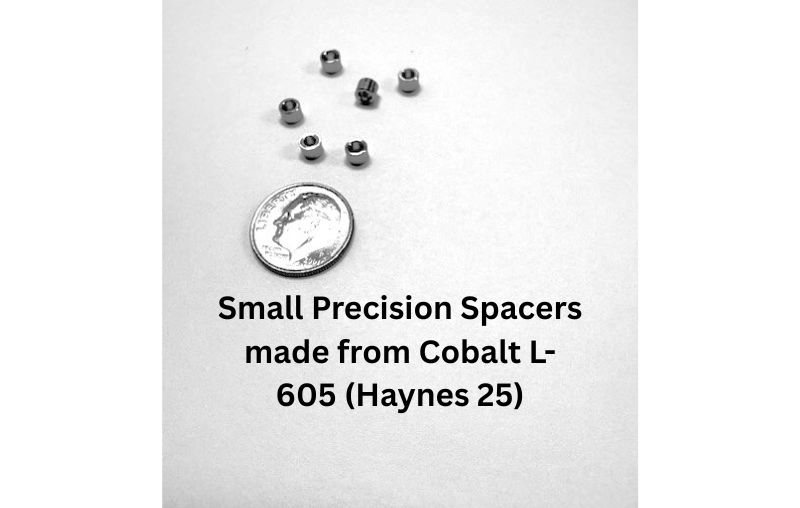
What Is Cobalt L-605 (Haynes 25)?Cobalt L-605, also known as Haynes 25 or UNS R30605, is a cobalt-nickel-chromium-tungsten superalloy renowned for its high strength, oxidation resistance up to 1800°F, and resistance to wear and galling. With a composition of ~50% cobalt, 20% chromium, 15% tungsten, and 10% nickel, it’s ideal for extreme environments.
Its hardness (around 20–25 RC, per web sources) and work-hardening properties make it challenging to machine, but its properties suit applications like aerospace turbine blades, medical stents, and small spacers (e.g., 3/16” OD, as discussed previously). At T&D, we leverage L-605’s strengths for precision components requiring durability.
Challenges of Machining Cobalt L-605Machining L-605 is demanding due to its unique properties:
- High Work-Hardening: L-605 rapidly hardens during cutting, increasing tool wear (machinability ~15% of B-1112 steel, per web sources).
- Heat Generation: Low thermal conductivity traps heat, risking tool damage and surface defects.
- Gummy Chips: Stringy, tough chips can clog tools, affecting finishes like Ra 8 µin.
- Hardness and Strength: Its strength at high temperatures complicates cutting, especially for small parts like 0.030”
- wall spacers.
- Tool Selection: Use TiAlN-coated carbide tools for durability, as discussed for small L-605 spacers. Avoid HSS tools for complex operations like drilling or tapping (web sources).
- Cutting Parameters: Optimize speeds (70–100 SFPM with carbide, per web sources) and light feeds to minimize heat and work-hardening. For example, we adjust parameters for 17-4 PH stainless steel (250–300 SFPM) to suit L-605’s tougher nature.
- Coolant Use: High-pressure, sulfur-chlorinated coolants reduce heat and improve chip evacuation, critical for small bores or threads.
- Rigid Work holding: Our T&D Micro Vise secures small parts, preventing vibration during micro-machining or reaming.
- Frequent Inspections: Use test indicators and CMMs to verify tolerances (±0.0003”) and surface finishes, ensuring compliance with ISO 9001.
- Toolpath Optimization: In our 32mm-capacity Swiss turn machines, we use CAM software to create light, multi-pass toolpaths, reducing stress on tools and parts.
These challenges require specialized techniques to achieve precision, particularly for micro-machining in Swiss turn machines. Best Practices for Machining Cobalt L-605At T&D Specialties, we use proven strategies to machine L-605 effectively:
Applications and BenefitsL-605’s properties make it ideal for:
- Aerospace: Turbine rings, blades, and fasteners requiring high-temperature strength.
- Medical: Implantable stents and small spacers (e.g., 1/8” long) for corrosion resistance.
- Industrial: Wear-resistant components like bearing races.
Machining L-605 with precision ensures reliable performance in these demanding applications, supported by our Kanban production capabilities. Trust T&D Specialties for L-605 Machining.
More info on Haynes 25 Here
Machining Cobalt L-605 (Haynes 25) demands expertise, but T&D Specialties rises to the challenge. With our Swiss turn machines, TiAlN-coated tools, and the T&D Micro Vise, we deliver small, precise parts that meet the toughest standards. Ready for your next L-605 project? Contact T&D Specialties today for a quote and experience precision machining at its best.
